Albino Penis Envy Mushrooms: A Closer Look at APE
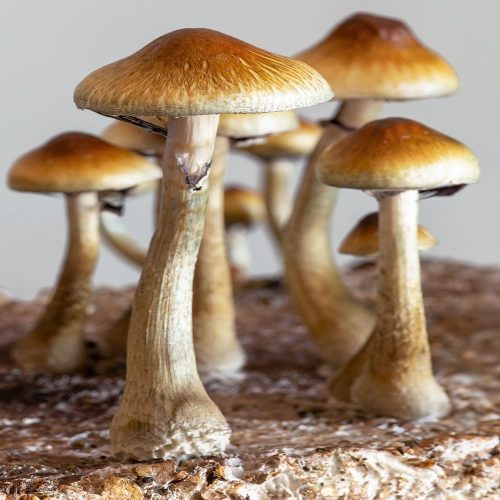
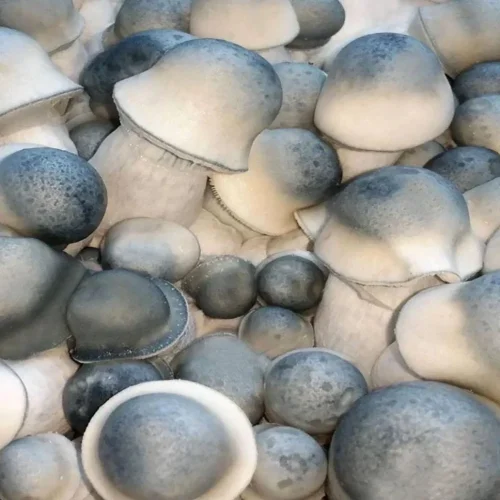
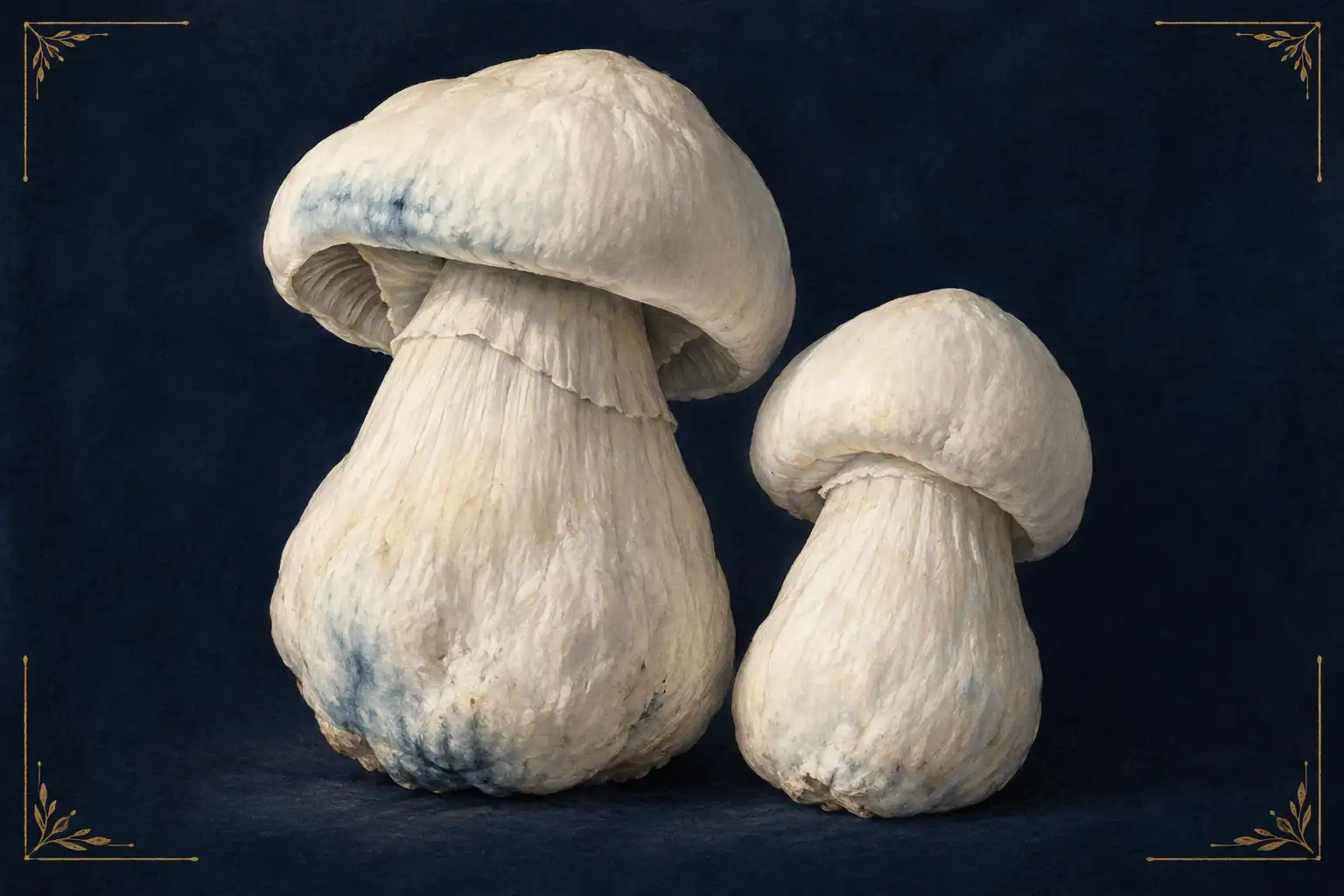
Albino Penis Envy mushrooms make an impression before you know their name. Pale caps, substantial stems, and occasional blue shading give them an almost sculptural appearance. Beside the warm caramel tones of regular Penis Envy, the difference is striking.
Often abbreviated APE, this familiar cubensis variety brings together two features that attract attention: the compact proportions associated with Penis Envy and a much lighter appearance. At Premium Spores, we see it as an interesting example of how much visual variety can exist within a single mushroom species.
So what makes Albino Penis Envy different, what does “albino” tell us, and how much can we actually learn from its appearance? A closer look reveals a more interesting story than color alone.
What Are Albino Penis Envy Mushrooms?
Albino Penis Envy is a named variety of Psilocybe cubensis, the same species that includes regular Penis Envy and Golden Teacher. APE is a more specific community and commercial designation, rather than a separate species name.
Think of the two names as answering different questions. Psilocybe cubensis tells you where the fungus belongs in biological classification. Albino Penis Envy tells you which named material is being discussed. That distinction becomes useful when comparing varieties that look dramatically different but still belong to the same species.
The APE name is also used in scientific research. A 2025 study examining fungal mycelium included material identified as P. cubensis “Albino Penis Envy.” Its inclusion shows that researchers can work with named specimens while still identifying them at the species level. It does not make every product or collection labeled APE biologically identical. [1]
A Different Look: Pale Caps, Thick Stems, and Blue Shading
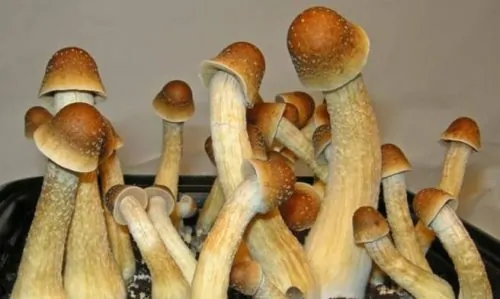
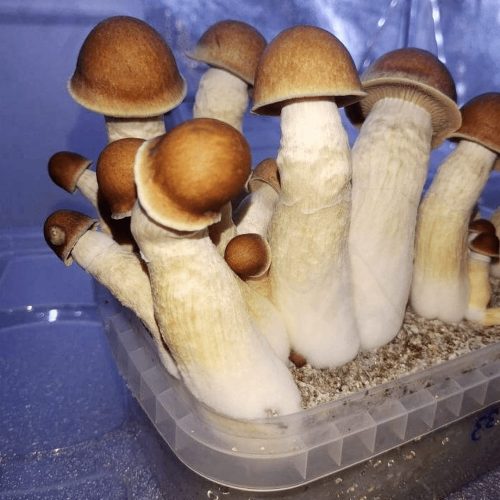
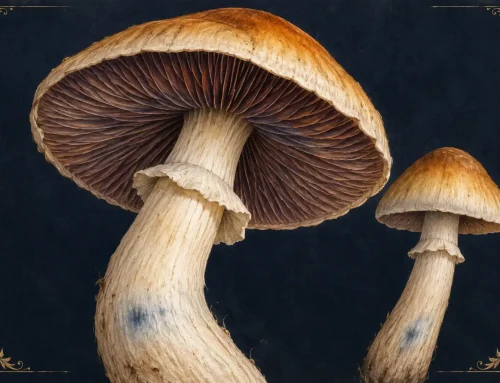
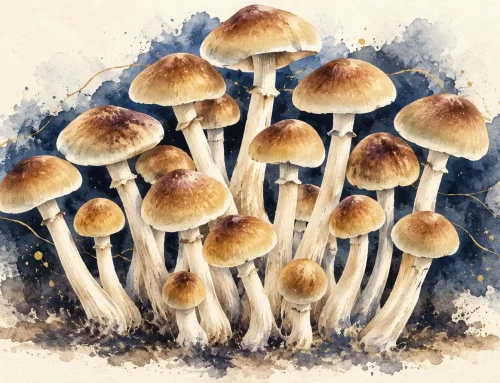
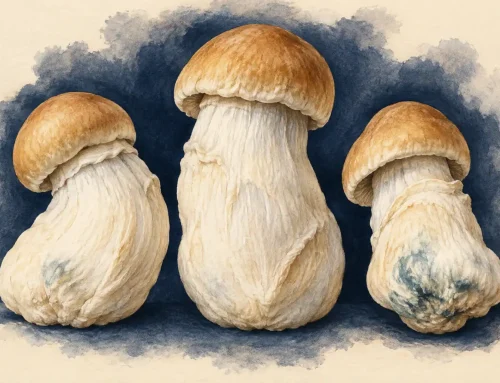
APE’s strongest visual impression comes from the combination of light coloration and substantial proportions. Creamy white to pale caps sit above thick stems, often giving the mushrooms a compact, rounded silhouette. These are the same broad traits described in our Albino Penis Envy product profile.
What does “albino” mean here?
In the APE name, “albino” points to the characteristic lack or marked reduction of the warm pigmentation associated with many cubensis mushrooms. The result can look ivory, cream, or almost white rather than tan or caramel.
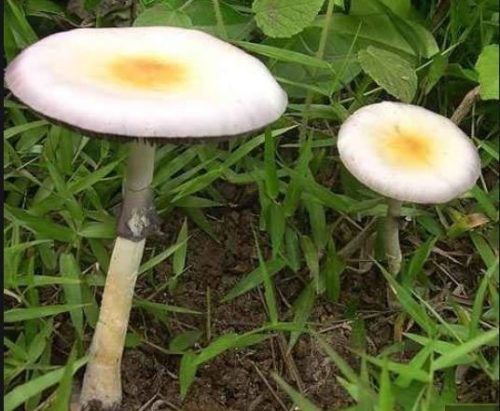
A name, however, is not a genetic test. A photograph can show pale tissue; it cannot establish the exact mutation responsible for that appearance. This is why an unfamiliar white mushroom should not automatically be identified as APE. Color is part of its description, not a complete identity.
Why do some specimens look blue?
Pale coloration and blue bruising are different phenomena. Research on P. cubensis has identified an injury-triggered chemical sequence involving psilocybin, psilocin, and the formation of blue-colored products. On a light background, blue areas can create a particularly noticeable contrast. [2]
That contrast can be visually dramatic without being a measurement of strength. A dark blue cap edge does not supply a psilocybin percentage, and a white cap does not prove a mushroom is inactive. Neither appearance can establish that an unknown mushroom is safe to consume.
Why photographs can look so different
Lighting has a large effect on pale subjects. Warm light can make an ivory cap look cream-colored, while cool light can emphasize gray or blue tones. Camera exposure, background color, and the stage captured in a photograph add more variation. Comparing several pictures is more useful when you know how they were made.
Albino Penis Envy vs. Penis Envy: What Changes?
The clearest everyday distinction is visual. Regular Penis Envy is commonly associated with tan-to-caramel caps; APE is associated with a much paler appearance. Both names are used for cubensis material with the substantial stems and compact caps familiar from PE descriptions.
| Feature | Albino Penis Envy | Penis Envy |
|---|---|---|
| Common abbreviation | APE | PE |
| Typical cap description | White, ivory, or pale cream | Tan, caramel, or golden brown |
| Familiar overall form | Substantial stem and compact cap | Substantial stem and compact cap |
| What appearance cannot establish | Exact ancestry or chemical composition | Exact ancestry or chemical composition |
The comparison becomes less straightforward when the question changes from “How do they look?” to “Which is stronger?” Color and chemical concentration are separate characteristics, and neither name supplies a fixed answer for every specimen.
Looking Beyond APE’s Potency Reputation
Albino Penis Envy is often discussed as a potent mushroom variety. The scientific question is more specific: what compounds were measured in a particular sample, and how much variation occurred among the materials tested?
A 2026 study compared 14 named P. cubensis strains, including APE and regular Penis Envy, under standardized conditions. Researchers found substantial differences in tryptamine concentrations between strains and variation among individual fruiting bodies within selected strains. This supports evaluating tested samples rather than assigning every mushroom a fixed strength from its name. [3]
Descriptions such as “more visual” or “more intense” may reflect personal accounts, but they do not establish a unique, predictable APE experience. Psilocybin can alter perception, emotion, and thinking; adverse experiences can include anxiety, nausea, confusion, and panic. Research into potential therapeutic uses does not establish that APE mushrooms or spore products treat a medical condition. [4]
Pigmentation, specimen identity, and chemical composition are different questions. Each needs its own evidence.
Albino Penis Envy Spores: A Closer Look at the Name
Someone searching for Albino Penis Envy mushrooms is often curious about the visible fruiting body. Someone searching for Albino Penis Envy spores is looking at a much smaller part of the fungus’s biology: its reproductive cells.
Spores are not miniature white mushrooms. Their appearance must be examined on its own terms, rather than inferred from a picture of the cap. Pigmentation, outline, wall features, and dimensions are observations about the material on the slide. The source label records something different: where that material is said to have come from.
Ordinary spore microscopy should not be treated as proof of a particular commercial lineage. It also cannot establish mushroom potency. A useful specimen record keeps the supplier’s designation, available batch information, and observation notes together without confusing one type of evidence with another.
Premium Spores offers Albino Penis Envy Isolated Spores. Visit the product page for the current specimen description and included materials. For background on the wider subject, our guide to psilocybin mushroom spores explains the connection between mushrooms and their reproductive cells.
Why APE Leaves Such a Strong Impression
APE’s appeal as a subject begins with contrast: a familiar mushroom form presented in an unfamiliar palette. Without the caramel cap taking center stage, the rounded profile, surface texture, and blue shading become more noticeable.
It also invites a useful set of questions. How much can color tell us? Where does a variety name end and a biological description begin? What changes when we move from a mushroom photograph to a microscope slide? Those questions make Albino Penis Envy interesting well beyond its reputation.
Albino Penis Envy FAQs
What does APE stand for?
APE stands for Albino Penis Envy, a named variety within Psilocybe cubensis.
Is every white cubensis mushroom Albino Penis Envy?
No. A pale appearance alone cannot establish a named lineage. Other cubensis material can also look white or cream-colored.
Why can an “albino” mushroom have blue areas?
Reduced background pigmentation and injury-related blueing are different processes. Pale tissue can still develop blue discoloration.
Is APE always stronger than regular Penis Envy?
A universal ranking is not justified by the name alone. Chemical measurements describe the tested material, and specimens can vary.
Where can I find Albino Penis Envy specimens from Premium Spores?
See our Albino Penis Envy Isolated Spores product page for current details and intended research use.
Sources and Further Reading
- Pepe et al. (2025). Mycelium Growth and Development of Psilocybe spp. Mother Cultures on Agar-Based Media. Cited for the study’s identification of APE material.
- Lenz et al. (2020). Injury-Triggered Blueing Reactions of Psilocybe “Magic” Mushrooms. Angewandte Chemie International Edition.
- Sharchaton et al. (2026). Surprising Variability in Tryptamine Profiles of Psilocybe cubensis Fruiting Bodies. Journal of Fungi.
- National Center for Complementary and Integrative Health. Psilocybin for Mental Health and Addiction: What You Need To Know.
Educational purposes only. This article is not medical advice or a wild-mushroom identification guide. Premium Spores specimens are intended for lawful microscopy and taxonomy research, not consumption or cultivation.