Growing Lion’s Mane Mushrooms
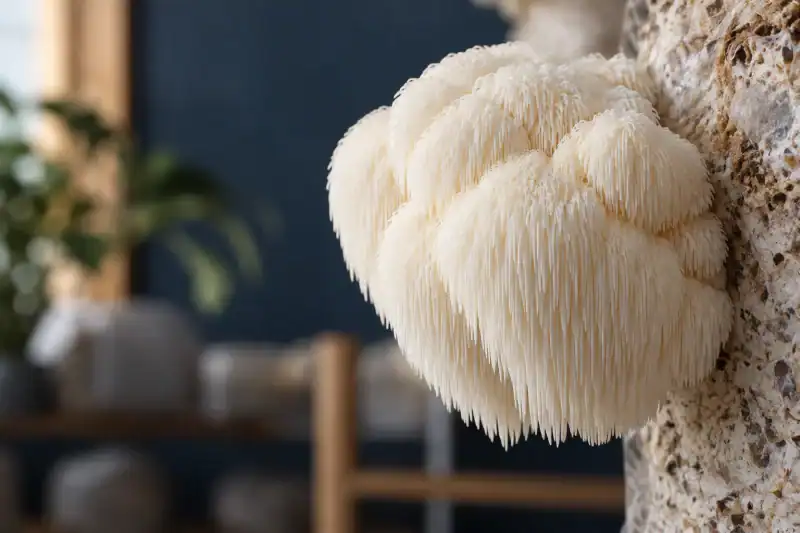
Lion’s mane mushrooms are easy to recognize: a pale, rounded fruiting body covered in soft, hanging teeth rather than a cap and gills. This edible hardwood fungus, Hericium erinaceus, is a favorite among gourmet growers for its unusual appearance, delicate texture, and versatility in the kitchen. Growing it well is a matter of starting with a clean culture, giving the mycelium a suitable wood-based food source, and balancing moisture with fresh air as the mushrooms develop.
This guide follows the full process from liquid culture to grain spawn to a fruiting hardwood block. It also explains an outdoor totem method, how to recognize a healthy crop, and what to adjust when a grow does not look right. If you are starting with culture rather than an already colonized block, see our Lion’s Mane Mushroom Liquid Culture Syringe.
What is a Lion’s Mane mushroom?
Lion’s mane is a wood-decomposing gourmet mushroom. Its rounded white body carries many slender downward-pointing spines, sometimes called teeth. Those structures distinguish it from familiar gilled mushrooms. As it matures, the teeth lengthen and the overall form can resemble a shaggy pom-pom or cascading mane. In nature, Hericium species grow on hardwood; North American Mycological Association describes lion’s mane cultivation outdoors on logs and indoors on sawdust.
The name lion’s mane is sometimes used loosely for other Hericium species. H. americanum, for example, often forms more branched clusters. When you buy a named culture, use its labeled species for planning and keep its identity separate from photographs of wild mushrooms. For culinary purposes, use cultivated mushrooms from a known edible culture or obtain a reliable expert identification before eating any wild specimen.
Choose a growing method
There are three practical starting points, and they require different equipment:
- Ready-to-fruit block: A fully colonized sawdust bag. You provide fruiting conditions and cut the bag. This is the simplest introduction, but it does not use a liquid culture syringe.
- Liquid culture → grain spawn → hardwood block: Start mycelium on sterilized grain, then transfer clean colonized grain into sterilized, supplemented hardwood substrate. This offers more control and lets you make several blocks, but demands careful sterile technique.
- Outdoor hardwood totem: Start with lion’s mane sawdust spawn and inoculate fresh hardwood sections. The work is more seasonal and fruiting is less predictable. A liquid culture syringe is first expanded into spawn; it is not a substitute for packing wood with sawdust spawn.
For someone learning from a liquid culture, one or two modest indoor blocks are a manageable first project. Keep records of the culture, substrate, dates, room conditions, and results so the next attempt is easier to improve.
Equipment and materials for an indoor grow
- A labeled lion’s mane liquid culture syringe and a sterile needle.
- One or more appropriately sterilized grain jars or filter-patch grain bags with injection ports, plus alcohol for cleaning ports and a clean working area.
- A pressure-capable sterilization setup suitable for the containers and substrate, or professionally prepared sterile grain and substrate bags.
- Hardwood sawdust or clean hardwood fuel pellets without additives; a modest amount of wheat bran or soybean hulls is a common supplement.
- Filter-patch grow bags, a scale, clean water, and a way to close bags after inoculation.
- A washable fruiting area with indirect light, a thermometer and hygrometer, humidification, and a way to introduce fresh air without blowing a fan directly at the mushrooms.
- Clean scissors or a knife for opening the bag and harvesting.
Hardwood is the dependable starting point. Avoid treated or painted wood, and do not assume a straw, coffee-ground, or manure recipe intended for another species will perform the same way with lion’s mane. Nutrient-rich grain and supplemented sawdust invite competitors as well as lion’s mane: clean preparation and correct sterilization matter.
Step 1: Turn liquid culture into clean grain spawn
Liquid culture is already growing mycelium suspended in liquid. It is not a spore syringe, a finished grain spawn, or a ready-to-fruit kit. The usual purpose of this first step is to expand a small amount of the culture on sterile grain. Premium Spores’ lion’s mane liquid culture is offered for that starting stage.
- Prepare the grain. Use a properly hydrated and sterilized grain jar or bag with an injection port and gas exchange. Follow the preparation and sterilization directions for the specific grain and vessel you use. Allow it to cool fully before inoculation.
- Set up a clean workspace. Clean the surface, wash your hands, and avoid fans, open windows, and unnecessary handling. Use a still-air box or an appropriate clean workspace if you have one. Sanitize the injection port and use a sterile needle. Follow the syringe’s handling instructions.
- Inoculate and label. Introduce an appropriate small amount of culture through the port, close it promptly, and label the date and species. More liquid is not automatically better; excess moisture can leave grain soggy.
- Incubate and inspect. Keep the container at a moderate, stable room temperature and out of direct sun. Cornell’s indoor cultivation guidance describes an incubation room around 70°F and notes that the center of a large block may run warmer than the room. Do not pack warm bags tightly together. Lion’s mane growth on grain may look lighter and less dense than another species, so judge it by steady spread and a clean appearance rather than demanding one shade of white.
- Use only healthy spawn. Grain should be substantially and evenly colonized before mixing it with the bulk substrate. Colored sporulating patches, wet or slimy grain, or an unusual sour or rotten smell are reasons to keep that container separate and discard it according to local household waste practices. Do not open a visibly moldy container indoors to investigate.
Colonization time varies with grain, container size, the amount of viable culture, temperature, and the individual strain. Watch progress rather than treating a calendar day as a guarantee. For growers who routinely test cultures, an agar plate is an additional way to assess a culture before committing several bags of grain.

Step 2: Prepare a hardwood fruiting block
A fruiting block gives the colonized grain a larger wood-based food source. Many growers use hardwood sawdust or pellets supplemented with wheat bran or soybean hulls. A published Hericium erinaceus experiment used a dry mix of 79% sawdust, 20% wheat bran, and 1% gypsum. That is one research formulation, not a universal requirement; recipes and yields vary by culture, wood, supplement, and process.
- Choose clean ingredients. Use untreated hardwood and a known supplement. Keep a record of the dry ingredient weights so you can compare later batches.
- Hydrate and mix evenly. Add clean water gradually until the sawdust is evenly damp without free water pooling in the bag. Hydration depends on whether you start with dry pellets, moist sawdust, or another base. A reproducible weighed recipe is more useful than guessing from a single squeeze.
- Bag and sterilize. Pack the mixture in a suitable filter-patch bag without blocking the filter. Sterilize the supplemented substrate with equipment and a time/temperature procedure appropriate to the bag size and load. A brief hot-water treatment designed for low-nutrient straw should not be assumed sufficient for a supplemented hardwood block.
- Cool completely. Let the center of the block return to room temperature before adding spawn. Warm substrate can damage mycelium and creates extra condensation.
- Inoculate with clean grain spawn. Open the bag in a clean workspace, add fully colonized grain spawn, distribute it through the substrate, and reseal. Minimize the time the bag stays open. If using a purchased sterile bag with a specified inoculation method, follow its directions.
- Incubate with space between bags. Keep the bag closed and its filter unobstructed. A moderate room temperature near 70°F is a reasonable starting point; avoid overheating, especially in large or closely packed blocks. Wait for consistent colonization. Lion’s mane may attempt to form bumps or tiny fruit bodies inside the bag before the block looks stark white; inspect the whole block and cut when the substrate is well established and clean.
Directly injecting liquid culture into a sterile hardwood bag is possible with a compatible injection-port setup, but a grain-spawn stage generally gives the mycelium more established inoculation points. If your sterile substrate supplier gives a specific liquid-culture protocol, follow that protocol rather than improvising an opening in a sealed bag.
Step 3: Cut the bag and set fruiting conditions
Once the block is well colonized, move it into a clean fruiting space. Keep most of the plastic against the substrate, then cut one or two small X-shaped openings on a side where the mushroom has room to grow. Cornell’s cultivation guide recommends small V or X cuts for lion’s mane and specifically recommends side fruiting: mushrooms on the top can catch water and develop problems. Multiple openings can divide a block’s energy among several smaller clusters, so start with a small number and leave room around each.
- Temperature: A cool room in roughly the low-to-mid 60s°F is a useful starting point for fruiting. Cultures vary; research on Hericium strains shows that some fruit at warmer temperatures while others require cooler conditions. Observe your strain and do not treat one set point as universal.
- Humidity: Keep the air humid while pins are forming. Cornell’s general specialty-mushroom guidance recommends above 85% relative humidity during early initiation and humidity in the 80% range as fruit bodies develop. Avoid droplets sitting on the fruiting body; the aim is humid air, not a wet mushroom.
- Fresh air: Introduce regular clean air and remove stale air. A stagnant enclosure can lead to misshapen, coral-like or overly compact growth. Balance ventilation with humidity: opening the enclosure wider may dry the delicate tips unless the humidifier keeps up.
- Light: Provide gentle ambient or indirect light sufficient to see the mushrooms clearly. Full sun can overheat and dry the block. Specialty mushrooms use light as an environmental cue; they are not photosynthesizing plants.
- Placement: Keep the block elevated on a clean shelf with room around the opening. Aim any fan away from the mushroom. Clean standing water from the enclosure and avoid spraying the white cluster directly.
Small knots at the cut become a compact white cluster, then the teeth begin to extend. Check daily as development can move quickly once the fruit body starts. A healthy cluster is typically light-colored and fresh-looking; occasional cream tones occur with age, while persistent yellowing, drying, or soggy brown patches call for a closer look at air, water, and harvest timing.
Troubleshooting common lion’s mane problems
- No pins at the opening: Check that the block is truly colonized, the cut exposes mycelium, humidity remains adequate, and there is fresh air and moderate light. A block that is still colonizing needs time; one with extensive competing growth needs isolation rather than more misting.
- Dry, yellow, or brown tips: Look for a dry enclosure, a fan directed at the cluster, too much heat, or a mushroom left growing past its best harvest stage. Improve the surrounding air before spraying the mushroom itself.
- Wet or soft patches: Reduce direct spraying and standing water. Check whether fruiting from the top has allowed droplets to settle. Harvest or remove damaged material only if the rest of the block is healthy; discard a block showing extensive spoilage.
- Oddly shaped growth or short, poorly defined teeth: Reassess ventilation, humidity, light, and the strain’s own form. One visual symptom alone does not diagnose its cause.
- Colored growth in grain or substrate: Isolate the container promptly. Do not try to rescue visibly contaminated grain by mixing it into new hardwood substrate.
Harvesting, storage, and another flush
Harvest when the cluster is still firm and pale and the soft teeth have developed, before extensive discoloration or deterioration. Use clean hands or a clean knife to remove it at its base without tearing open a large area of the block. Handle it gently: the teeth bruise easily. Cornell recommends cooling harvested specialty mushrooms promptly and notes that lion’s mane has a shorter shelf life than shiitake. Refrigerate in a breathable container, keep it away from pooling water, and cook while fresh.
Some healthy blocks produce another flush after a rest. Remove leftover mushroom tissue from the opening, continue to keep the block in a clean and appropriate environment, and watch for new pins. Later flushes may be smaller, and the outcome depends on the amount of food and water remaining in the block. Dispose of a block that develops extensive mold, persistent off odors, or soft decay.
Outdoor alternative: hardwood totems
Outdoor growing uses a different inoculant and a longer timeline. A common totem method sandwiches lion’s mane sawdust spawn between sections of fresh hardwood and keeps the stack in a shaded, protected, reasonably moist place. Another option is a prepared hardwood stump. Keep the spawn in close contact with fresh wood and protect the stack from drying and competition while it colonizes. Outdoor weather, wood species, and culture all influence whether and when it fruits.
Do not inject liquid culture directly into a log and expect the same result as a properly inoculated sawdust-spawn totem. If beginning with liquid culture, first produce suitable sawdust spawn with clean technique, or buy prepared sawdust spawn for the outdoor project. Cornell describes outdoor lion’s mane as often fruiting seasonally, commonly in fall, and reports that experimental totems varied substantially by strain and year. Choose indoor blocks if you want tighter control over timing.
Cooking the harvest
Fresh lion’s mane can be sliced into thick pieces or torn into bite-size clusters. Cook in a dry skillet first to release some moisture, then add oil or butter and brown the surfaces. Its tender, fibrous texture lends itself to seared medallions, pasta, soups, or a simple mushroom sauté. Cook thoroughly and try a modest serving the first time you eat any unfamiliar gourmet mushroom. The attraction here is culinary: distinctive texture, a delicate savory flavor, and the satisfaction of growing an edible fungus from culture to plate.
Frequently asked questions
Is lion’s mane liquid culture the same as a spore syringe?
No, its not. Liquid culture contains living mycelium already growing in a liquid medium.
Can lion’s mane grow on plain hardwood sawdust?
Yes, hardwood is its basic food source, but growers often add a measured supplement to improve performance. Supplemented blocks are more nutrient-rich and need careful preparation and sterilization.
Should I cut the whole top off the bag?
For lion’s mane, small side cuts are a sensible starting point. The remaining plastic helps protect substrate moisture while the side position reduces water collecting on the mushroom.
How long does it take?
It varies. A ready to grow Lion’s mane grow kit takes about 4-6 weeks. Growing from LC or agar takes about 10 weeks or longer and outdoor logs could take up to 1.5 years. Grain colonization, block colonization, and fruit development each depend on the culture, inoculation rate, substrate, temperature, and bag size. Plan in stages, label dates, and use the condition of the mycelium and fruit body to decide when to advance.
Start with a known culture
Growing lion’s mane is most rewarding when each stage has a clear purpose: expand a clean culture, colonize a compatible hardwood substrate, make a small side opening, and give the developing mushroom humid air with regular ventilation. To begin the culture-to-spawn route, explore the Premium Spores Lion’s Mane Mushroom Liquid Culture Syringe. For the shortest route to a first harvest, start with a separate ready-to-fruit block.
Sources and further reading
- Cornell Small Farms: Seven Stages of Cultivation — substrate preparation, incubation, lion’s mane side cuts, fruiting conditions, and harvest.
- Cornell Small Farms: Outdoor Production — hardwood totems and seasonal lion’s mane fruiting.
- Cornell Small Farms: Lion’s Mane Forest Cultivation Research — strain and year-to-year variation in outdoor totems.
- North American Mycological Association: Commonly Cultivated Species — lion’s mane on logs or sawdust.
- Agriculture (2025): Hericium on supplemented sawdust — an example experimental substrate formulation and fruiting environment.