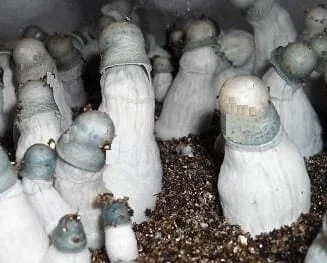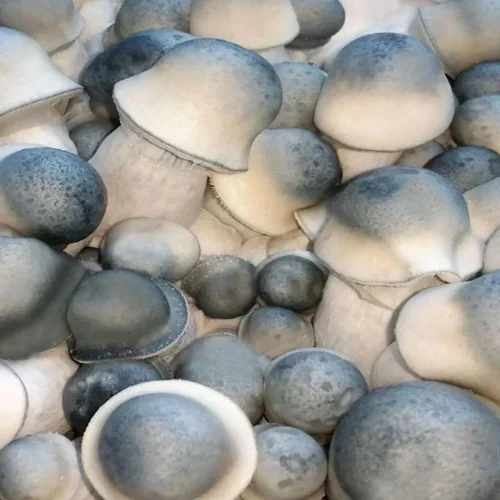
Reishi is one of the most visually distinctive wood-growing mushrooms. A mature fruiting body may develop a polished red-brown shelf with a pale growing edge, while another grow produces slender branching “antlers.” Those shapes are part of the reason growers find reishi so interesting: a culture, the wood-based substrate, and the fruiting environment all influence what appears at the opening of the bag.
This guide covers reishi’s appearance, the difference between antler and shelf forms, how to grow it from liquid culture on hardwood, and how to read the changes in a developing fruiting body. Premium Spores offers both a Reishi (Lingzhi) Liquid Culture Syringe and an Antler Reishi Liquid Culture. They are separate culture products; their labels and growing directions should guide your choice.
What is reishi?
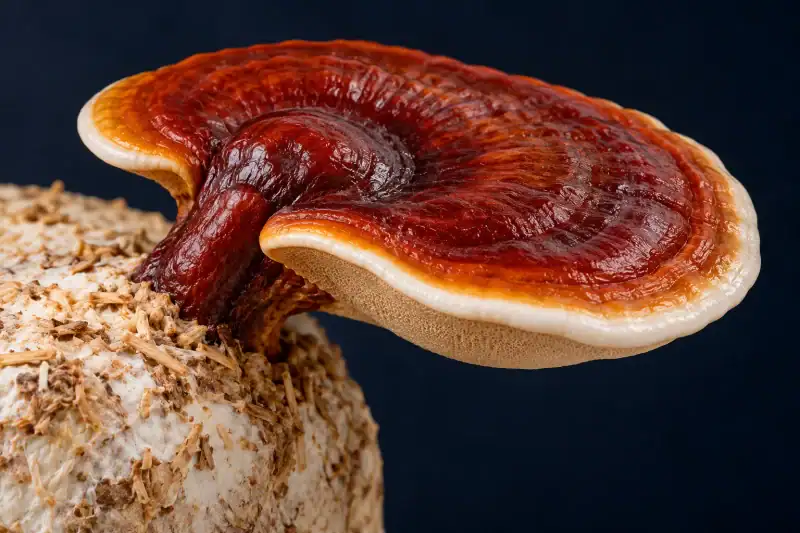
“Reishi” and “lingzhi” are common names used for glossy, wood-decomposing mushrooms in the genus Ganoderma. They have a firm, corky to woody texture and develop pores on the underside of a formed cap rather than the gills found on many familiar mushrooms. Fresh growth may show a white edge or tip; older parts often turn amber, rust red, or deep brown and take on a varnished appearance.
The common name does not always settle the scientific name. Several distinct Ganoderma species have been sold or described as G. lucidum, and a published genetic survey found that products labeled “reishi” included more than one species. This is a good reason to follow the identity stated for a particular culture rather than assuming every reishi specimen worldwide is the same species. Our antler culture is labeled Ganoderma lingzhi; the Reishi (Lingzhi) culture is a separately listed product.
Reishi is often placed with gourmet mushrooms because it is grown and handled by specialty mushroom growers, but it differs markedly from tender mushrooms such as lion’s mane or oyster. A mature shelf is tough and woody. The appeal of a grow lies in its distinctive morphology, growth on hardwood, and striking finished specimens. This article focuses on cultivation and appearance.
Antler reishi versus shelf or conk reishi
A reishi fruiting body often begins as a pale-tipped projection. Under some conditions it continues upward as a smooth stalk or branched antler. Under more ventilated conditions, growth may broaden into a kidney-shaped or fan-shaped cap, often called a conk or shelf. Oregon State University Extension describes these two appearances and associates their development with oxygen availability. A study of reishi cultivation likewise links restricted ventilation and increased carbon dioxide with antler formation.
“Antler reishi” describes a form, not necessarily a separate mushroom species. That does not make every commercial culture interchangeable: different strains or species may respond differently to the same room. If you have a culture selected or sold as Antler Reishi, begin with its stated growing guidance, then observe what the culture actually does. An antler may later broaden into a cap when ventilation increases; a culture sold as standard reishi can also begin with finger-like growth.
- Antler form: Upright, narrow, sometimes branched projections with pale growing tips; a broad cap and mature pore surface may be absent.
- Shelf or conk form: A broadened lacquer-like cap, often with a white active margin and a pore-bearing underside once developed.
- Transition form: An antler tip can flatten or fan outward as conditions change. The same block may show more than one intermediate shape.
Neither shape alone proves a different species, an improved culture, or a particular chemical profile. Light, ventilation, substrate, genetics, and age interact. A controlled comparison needs the same culture and substrate on both sides and carefully recorded conditions.

From liquid culture to a reishi fruiting block
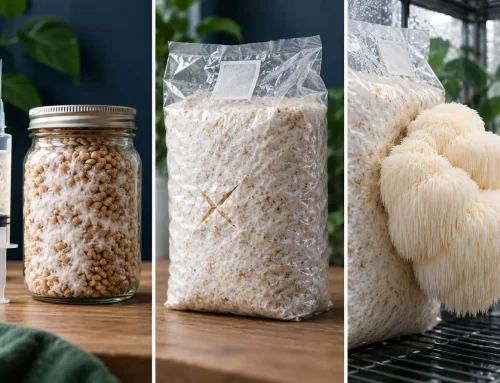
A liquid culture syringe contains actively growing mycelium in a liquid medium. It is a starting material, not a ready-to-fruit block. A common indoor sequence is liquid culture → clean grain spawn → sterilized hardwood substrate → colonized block → fruiting body. Oregon State’s reishi growing guide describes hardwood sawdust and bran blocks inoculated with grain spawn. The exact timetable varies with the culture, substrate, bag size, temperature, and how the block is fruited.
1. Start with a clean culture and grain
Use appropriately hydrated and sterilized grain in a jar or filter-patch bag with a suitable injection port. Clean the work surface and port, use a sterile needle, and introduce a modest amount of liquid culture without leaving the grain soaked. Label the vessel with the culture and date. A still-air box or other suitable clean workspace reduces the chance that competing organisms enter during handling.
Keep the grain at a stable temperature within the range recommended for your culture, away from direct sun and overheating. Our product pages list differing colonization and fruiting ranges for the Reishi (Lingzhi) and Antler Reishi cultures, so use the label for the culture in your hand. Watch for even mycelial spread rather than treating an estimated day count as a guarantee. If the jar develops green, black, or other colored patches, unusually wet or slimy grain, or an off odor, isolate it and do not use it to inoculate fresh substrate.
2. Prepare a hardwood substrate
Clean untreated hardwood sawdust or additive-free hardwood pellets are dependable bases for reishi. A measured amount of wheat or rice bran is commonly added as a nutrient supplement. A study on one lingzhi strain reported good fruiting on a sawdust-based formulation with rice bran, corn powder, and calcium carbonate; it is a research example, not a recipe guaranteed for every culture. Start with a tested recipe suited to the strain and equipment you are using, record ingredient weights, and hydrate evenly without leaving water pooling at the bottom of the bag.
Supplemented hardwood must be properly sterilized in a suitable filter-patch bag before inoculation. Follow the substrate bag and sterilization equipment instructions for the actual block size; a treatment suitable for low-nutrient straw may not be sufficient for a rich sawdust-and-bran mixture. Allow the entire block to cool before it touches live spawn.
3. Inoculate and incubate the bag
In a clean work area, mix fully colonized grain spawn into the cooled hardwood substrate, seal the bag, and keep its filter patch unobstructed. The expanding mycelium should knit the block together. Leave air space between bags: a colonizing block can become warmer inside than the surrounding room. Avoid opening the bag repeatedly to check progress. If antler-like projections start forming within a sealed bag, that can be a sign the culture is eager to fruit, but inspect the substrate for clean colonization before making a fruiting opening.
Some growers work directly from liquid culture to a sterile hardwood bag using a purpose-made injection port. Grain spawn generally provides more established inoculation points, so use a direct-to-block method only if your prepared substrate and culture instructions support it. Never inject a liquid culture into an ordinary outdoor log and expect it to behave like a log inoculated with sawdust spawn.
Fruiting: choosing a form and managing the environment
When the block is well colonized and clean, give it an intentional fruiting opening with a clean blade or follow the supplier’s bag instructions. Leave the rest of the bag in place to conserve moisture. Position the opening so a developing antler or cap has physical room to extend without pressing against a wall or another bag.
All reishi grows need workable moisture, temperature, light, and gas exchange; the balance differs with the form you are trying to observe. An enclosure intended to favor antlers can have less fresh-air exchange than one intended to develop broad caps, but it should not be airtight. The living block still respires, and a sealed, stagnant, dripping chamber creates other problems. Avoid treating “high CO₂” as an invitation to occupy an unventilated grow room; adjust the small fruiting enclosure while maintaining safe room ventilation.
- For antler-like development: Permit upright growth, maintain a humid environment, and keep the fruiting setup relatively enclosed while preserving some gas exchange. The amount of branching and whether a cap eventually appears depend on the culture and conditions.
- For a broad conk or shelf: Increase fresh-air exchange as the tip develops, provide gentle indirect light, and leave room for the cap to spread. Observe new growth at the tip; an established antler can begin to fan outward after ventilation improves.
- For both: Keep the substrate moist inside its bag without soaking the exposed fruit body. Avoid strong fan airflow aimed directly at a soft growing edge, standing water, and direct hot sun. Check temperature and humidity where the block actually sits.
Do not transplant a temperature number from another species or a different reishi culture without checking it. Some studies cultivate Ganoderma strains quite warm, while Premium Spores’ separate cultures list different suggested ranges. The product-specific guidance and the response of your culture matter more than a universal internet chart.
What to expect as reishi matures
Early reishi can look like a small pale knot emerging from wood or a bag opening. It may extend as a cream-tipped stalk, then color develops behind the actively growing tip. With enough room and suitable conditions, the margin may spread into a layered, glossy reddish shelf. When a cap forms, its underside has tiny pores rather than gills. Some mature conks release brown spores that settle as dust on the cap and nearby surfaces. Antlers may remain narrow and lack the conspicuous underside of a broad shelf.
Reishi generally takes longer to produce a mature woody fruiting body than fast-fruiting gourmet mushrooms. Oregon State describes a staged outdoor block method in which the block first colonizes, then develops antlers, then forms a shelf over a longer period after planting. That is a description of a specific growing method, not a promise that every indoor grow will follow the same schedule. Keep photographs and notes at least weekly; the shape at one moment may not be the final shape.
Troubleshooting
- The block stalls before colonization: Check grain quality, substrate preparation, inoculation cleanliness, and temperature. Separate a bag with spreading colored growth, slime, or a foul odor rather than trying to fruit it.
- Antlers form, but I wanted a broad cap: Reassess ventilation and light while protecting humidity. More fresh air can encourage cap development in some cultures; a cap is still not guaranteed.
- A broad cap forms, but I wanted antlers: The environment may provide more fresh air than your intended antler setup, or the culture may favor cap formation. Compare conditions over several grows rather than sealing the bag completely.
- The pale edge dries or curls: Check humidity, high heat, or a fan aimed at the fruit. Change the surrounding environment instead of soaking the cap directly.
- The surface seems unusually wet: Avoid droplets collecting on the body, improve drainage and moderate the misting schedule. Distinguish harmless condensation inside the bag from a mushy or decaying fruiting body.
- Brown powder appears near a mature cap: This may be a spore deposit from the pore surface. Inspect the specimen carefully and distinguish a uniform spore dusting from patchy mold or decay.
Harvesting and display
For a shelf-form specimen, harvest after the cap has developed its intended size and lacquered appearance, before obvious soft decay. An antler can be harvested after it reaches the form you want; the result will be a different shape and often a different maturity stage from a large shelf. Cut cleanly near its base and avoid ripping open the substrate bag unnecessarily. Because mature reishi is tough and woody, it is not usually prepared as a tender sautéed mushroom. Some growers dry specimens for display; if doing so, dry them thoroughly and store them away from moisture.
Watch a healthy block for later growth, but do not promise a second flush. Strain, remaining substrate, moisture, and fruiting conditions all influence the outcome. Dispose of spent material responsibly and avoid moving non-native cultivated cultures into natural woodland habitats. If you are working with a wild Ganoderma specimen, appearance alone is not enough to settle its exact species.
Should you grow Reishi and Antler Reishi separately?
You can grow each culture in its own labeled bag and compare them under the same conditions. That is a useful way to learn how much of the difference comes from the culture and how much comes from the environment. Premium Spores offers distinct Reishi (Lingzhi) and Antler Reishi liquid culture products. Keep their labels and growing records separate; the name “antler” indicates an intended or familiar appearance, not a guarantee that a sealed bag will always make antlers or that the other culture never will.
Frequently asked questions
Are antler Reishi and regular Reishi different species?
Not necessarily. Antler describes a fruiting shape that a Ganoderma culture may produce under particular conditions. Meanwhile, “reishi” is also a common name applied to multiple species. Check a culture’s species label instead of deciding identity from shape alone.
Does high CO₂ always make antlers?
No single environmental factor guarantees a result. Restricted ventilation is associated with antler formation in research, but light, genetics, moisture, substrate, and development stage also matter. Maintain some gas exchange and safe room ventilation.
Do I need grain spawn if I have liquid culture?
Grain spawn is a conventional expansion step before inoculating hardwood blocks. A suitably prepared sterile substrate with an injection port may support a direct-inoculation workflow if its supplier specifies one.
Can I grow reishi outdoors?
Yes. Oregon State University Extension describes both hardwood-based fruiting blocks planted in a shady, moist site and hardwood logs inoculated with sawdust spawn. Outdoor work is more seasonal and generally slower than observing a small indoor block.
Where to begin
If you want to explore classic lacquered shelves, begin with the Reishi Mushroom (Lingzhi) Liquid Culture Syringe. If the upright form is your focus, see the separate Antler Reishi Mushroom Liquid Culture. Start each with clean spawn and a suitable hardwood substrate, then photograph the developing fruiting body and adjust the fruiting environment with a clear goal in mind.
Sources and further reading
- Oregon State University Extension: Reishi Mushroom Growing Guide — reishi forms, block and log methods, and outdoor timelines.
- Frontiers in Microbiology: Assessing the Ganoderma Species in Commercial Reishi Products — taxonomy and illustrated antler-to-shelf morphology.
- Development of Antler-Type Fruiting Bodies of Ganoderma lucidum — experimental work on ventilation and light.
- Vietnam Journal of Science, Technology and Engineering: Lingzhi Cultivation Conditions — one strain’s mycelial and substrate study.
- Cornell Small Farms: Seven Stages of Cultivation — general clean-spawn and supplemented hardwood principles.